The best developmental activities by age are not the flashiest toys, the fullest calendar, or the most expensive classes. They are the simple, repeated experiences that help a child grow stronger in four essential areas: physical, mental, emotional, and spiritual development. When parents know what matters most at each stage, everyday life becomes a powerful classroom.
A child does not need to excel in every area at once. Development is uneven, personal, and influenced by temperament, health, family circumstances, and opportunity. Your job is not to manufacture a perfect child. It is to provide the kind of steady guidance, connection, challenge, and values that help your child become a capable, grounded person.
Best Developmental Activities by Age
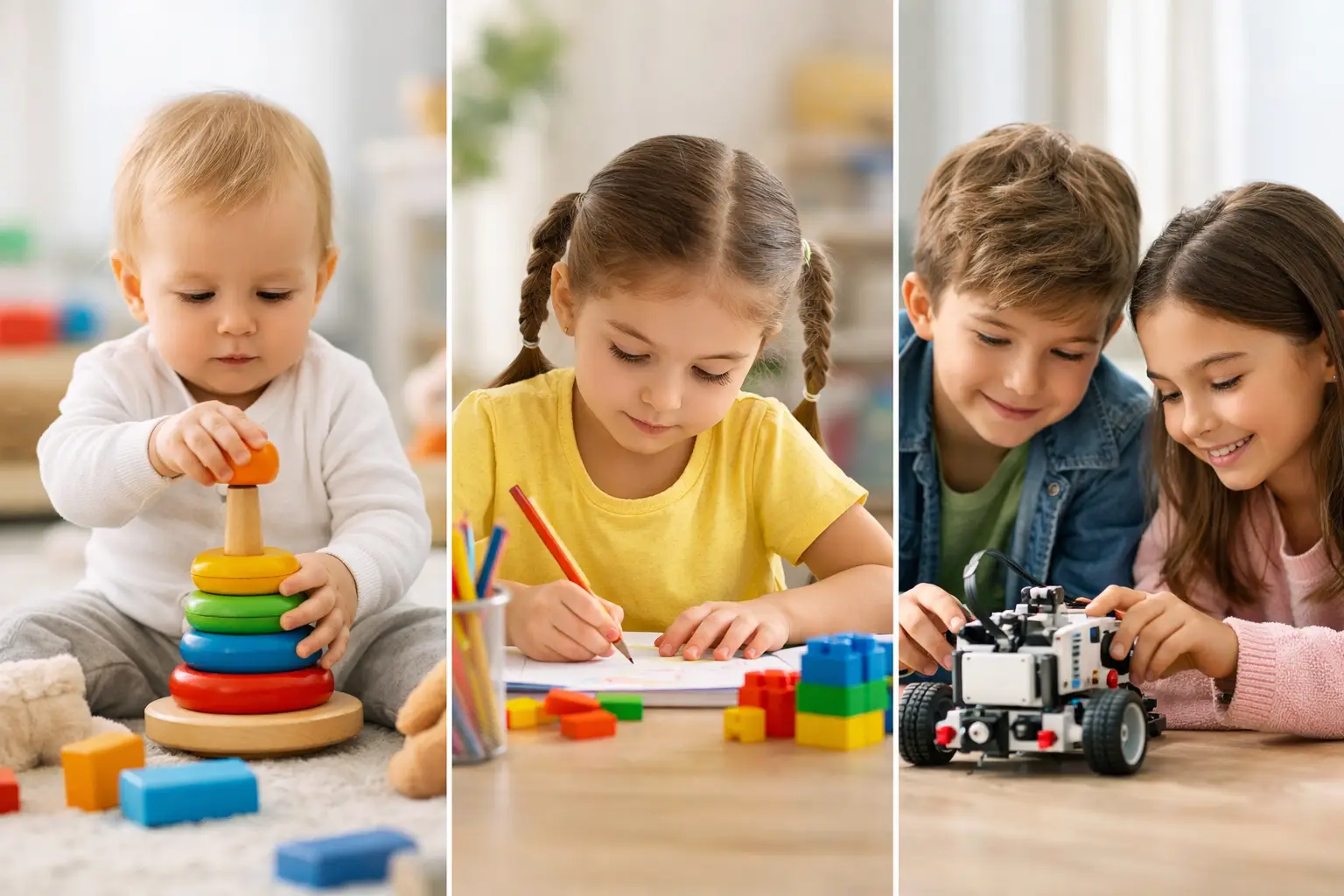
Pregnancy to 12 months: Build safety and connection
Before and during a baby’s first year, the most meaningful developmental work happens through care and relationship. A baby learns whether the world is safe through touch, eye contact, responsive feeding, soothing, and the familiar sound of a parent’s voice.
Talk and sing during daily routines, even before your baby can understand words. Describe what you are doing: “I’m putting on your warm socks,” or “You hear the washing machine.” This builds early language patterns and gives your baby a calm, connected experience of the world.
For physical development, allow supervised floor time every day. Tummy time, reaching for a soft toy, rolling, and eventually crawling build strength that containers cannot provide. A baby does not need constant entertainment. They need room to move, a watchful adult, and time to practice.
Emotional and spiritual growth begins here, too. Responding consistently to cries does not spoil a baby. It teaches trust. Gentle routines, loving words, gratitude spoken aloud, and peaceful moments together create the earliest foundation for security and belonging.
Ages 1 to 3: Encourage movement, language, and independence
Toddlers are built to explore. They want to touch, carry, climb, dump, repeat, and say “no.” This can feel exhausting, but it is also necessary work. The goal is to create safe limits without crushing healthy curiosity.
Invite your toddler to help with real jobs. Let them put napkins on the table, carry socks to the laundry basket, wipe a low surface, or place toys in a bin. These activities develop coordination, attention, confidence, and a growing sense that they matter to the family.
Language grows through conversation, not correction drills. Read short books repeatedly, name feelings as they arise, and pause long enough for your child to answer. If they point and grunt for a snack, you can calmly model the words: “You want crackers. Say, ‘Crackers, please.’”
Toddlers also need help managing huge feelings in small bodies. Instead of demanding self-control they have not developed yet, give simple choices and name the boundary: “You are mad. I will not let you hit. You can stomp your feet or squeeze this pillow.” That is emotional instruction in real time.
Ages 4 to 6: Grow imagination and self-control
Preschool and early elementary children learn through play, stories, movement, and repetition. They are beginning to understand rules, friendships, fairness, and cause and effect, but they still need adults to make those lessons concrete.
Make room for imaginative play with open-ended materials such as blocks, dress-up clothes, cardboard boxes, art supplies, and stuffed animals. A child running a pretend restaurant or building a blanket fort is practicing planning, communication, problem-solving, and social roles.
Games with simple rules are especially valuable at this age. Board games, matching games, Simon Says, scavenger hunts, and follow-the-leader activities strengthen memory, attention, turn-taking, and frustration tolerance. Do not rush to rescue your child from every loss. Help them practice saying, “I’m disappointed, but I can try again.”
This is also a strong season for building a moral vocabulary. Talk about honesty, kindness, courage, gratitude, and responsibility through ordinary family moments. When your child returns something they borrowed, point out the character behind the action: “You kept your word. That shows responsibility.” Values become real when they are connected to behavior.
Ages 7 to 10: Build competence through responsibility
Children in this stage want to know, “What can I do?” They benefit from meaningful responsibility, hands-on learning, and growing opportunities to contribute. Constantly doing things for them may feel efficient, but it can quietly communicate that they are not capable.
Give your child regular household jobs with clear expectations. They might feed a pet, sort laundry, pack part of their lunch, help prepare dinner, or keep a bedroom reasonably organized. The task matters less than consistency. Competence is built when children practice, make mistakes, and learn how to finish what they start.
Support mental growth by making learning active. Cook from a recipe and discuss fractions. Grow a small garden. Keep a nature journal. Ask your child to plan a family game night within a modest budget. These activities connect academic skills to real life and show that thinking is useful beyond schoolwork.
Friendship challenges often become more noticeable now. Rather than immediately solving every conflict, coach your child through a few questions: What happened? How do you think the other person felt? What part was yours to own? What could you say next? This strengthens empathy while also teaching accountability.
Ages 11 to 13: Protect identity while inviting honest conversation
The preteen years can bring intense emotions, stronger opinions, changing bodies, and greater sensitivity to peers. This is not the time to pull away because your child seems moody or private. It is the time to stay available without becoming intrusive.
Create predictable opportunities to talk that do not feel like an interrogation. A drive home, a walk, bedtime check-in, or helping make dinner may work better than asking, “How was your day?” across the table. Try specific questions: “What felt hard today?” “Who made you laugh?” “What is something you wish adults understood?”
Physical development needs attention during this stage because sleep, nutrition, activity, and body image can all become pressure points. Encourage movement your child genuinely enjoys, whether that is a sport, dance, hiking, martial arts, biking, or strength training with proper guidance. The goal is not a certain body type. It is strength, energy, confidence, and respect for the body they have.
Give preteens increasing responsibility with support. They can manage homework planning, help with meals, care for younger siblings in small ways, and begin learning basic money decisions. Natural consequences can be useful, but they should teach rather than humiliate. A forgotten assignment is an opportunity to plan better next time, not proof that a child is lazy.
Ages 14 to 18: Practice judgment before independence arrives
Teenagers need room to make decisions, but freedom without guidance is not maturity. The most effective parents gradually shift from managing every choice to coaching their teen’s judgment. Your influence remains powerful when it is built on trust, consistency, and honest conversation.
Invite your teen into adult-level responsibilities. Let them help plan meals, manage part of a budget, schedule appointments, prepare for job interviews, learn basic car care, or organize a family project. These are not side tasks. They are rehearsals for independent life.
Mental development at this age includes learning how to evaluate information, not simply absorb it. Discuss advertisements, social media claims, news stories, and group pressure. Ask, “Who benefits if people believe this?” “What evidence would change your mind?” and “Does this choice match the person you want to become?”
Emotional maturity grows when teens can talk about failure without fearing shame. When a grade drops, a friendship ends, or a rule is broken, start with curiosity before consequences. Accountability still matters. So does the message that one poor decision does not define a person.
Spiritual development becomes more personal in adolescence. Teens need space to ask serious questions about purpose, faith, suffering, values, and identity. You do not need to have every answer. What matters is showing that truth matters, character matters, and their inner life is worth discussing.
Use Activities to Build the Whole Child
A developmental activity is most effective when it serves more than one purpose. Cooking together builds math, coordination, patience, conversation, and responsibility. A family walk builds physical health while creating a natural setting for emotional connection. Serving a neighbor teaches practical skills and compassion at the same time.
This four-dimensional approach is what changes parenting from a string of reactions into a clear plan. If your child is struggling, ask which area needs support. A child who is irritable may need more sleep and movement. A child who avoids schoolwork may need a task broken into smaller steps. A child acting out may need stronger boundaries, more connection, or help naming what they feel.
The instruction manual you never got is not about controlling every outcome. It is about seeing your child clearly, choosing the next helpful activity, and returning to that work day after day. A few intentional minutes today can become the confidence, character, and resilience your child carries for life.
Click here to explore parenting resources and tools starting at under a dollar. Equip yourself with knowledge and strategies to raise confident, resilient, and empathetic children.





There are no comments