One child speaks in full sentences at 2. Another takes longer and is still doing just fine. One fourth grader devours books. Another is brilliant with people, hands-on projects, and problem-solving. That is why looking at child development milestones by age should never feel like grading your child. It should feel like finally getting the instruction manual you never got – a clear way to notice growth, support strengths, and catch concerns early.
Milestones matter because they give parents a map. But a map is not the same thing as the trip itself. Children develop in bursts, pauses, and uneven patterns. A child may be far ahead physically and need more support emotionally. Another may think deeply but struggle with frustration or social confidence. The most useful way to read milestones is through a whole-child lens: physical, mental, emotional, and spiritual.
How to use child development milestones by age
Think of milestones as guideposts, not deadlines. They help you ask better questions. Is my child growing in coordination, communication, self-control, empathy, curiosity, and character? Are they moving forward overall, even if one area is slower than another?
This approach changes everything for parents. Instead of obsessing over one skill, you start seeing patterns. You stop asking, “Is my child behind in everything?” and start asking, “What kind of support does my child need right now?” That is a far more powerful question.
Birth to 12 months: trust, attachment, and rapid growth
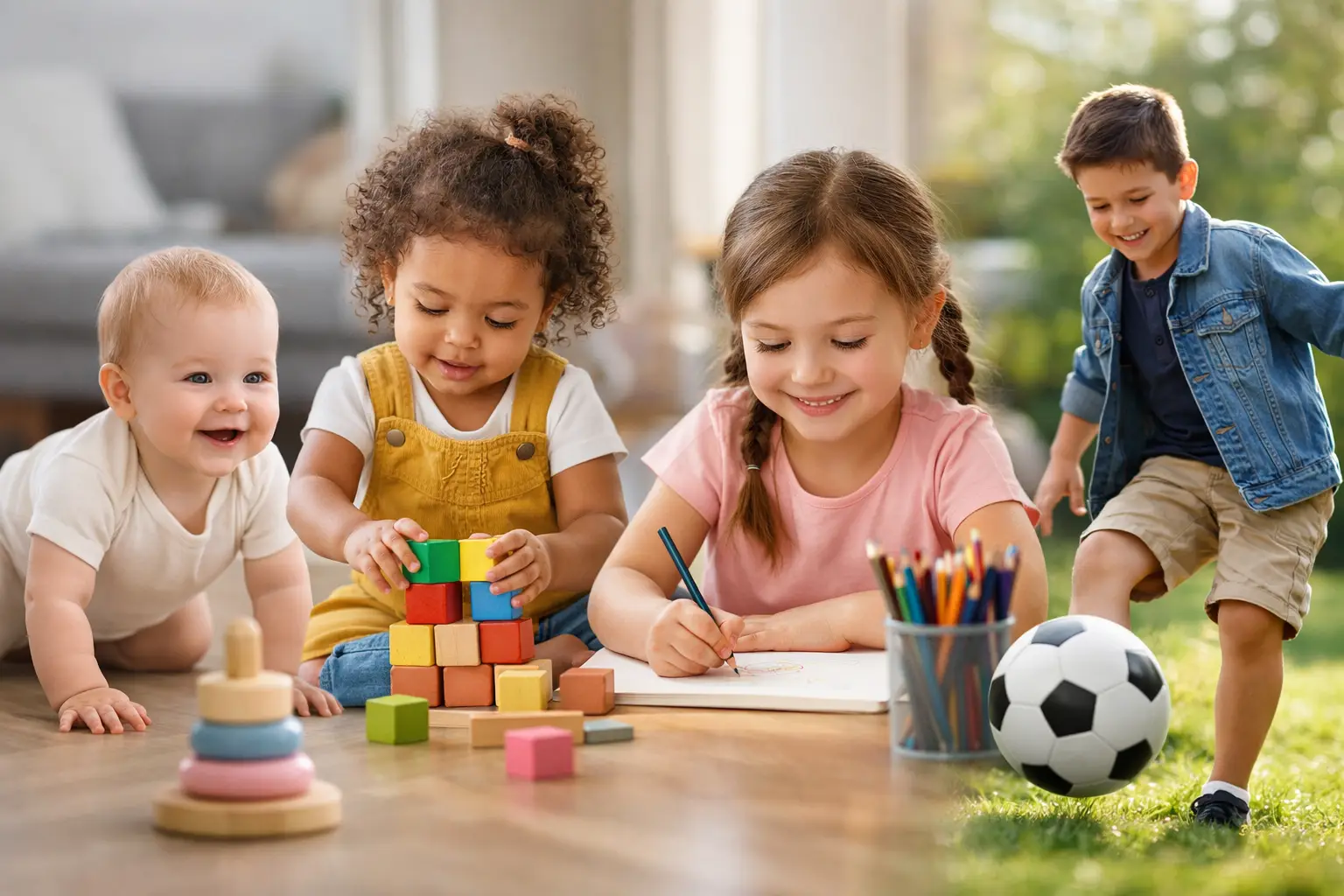
The first year is packed with visible change. Babies learn to lift their heads, roll, sit, crawl, pull up, and often take first steps near the end of the year. Mentally, they begin recognizing familiar faces, tracking objects, babbling, and understanding simple cause and effect. Emotionally, they are building attachment. They learn whether the world feels safe, responsive, and predictable.
Spiritually, this stage is simple but profound. Your baby is learning through your tone, touch, consistency, and presence that love is real. That foundation matters more than many parents realize.
What helps most at this age is responsive care. Talk to your baby often. Make eye contact. Sing. Read picture books even when they cannot follow the story. Offer floor time, not just containers and screens. If a baby is not making eye contact, not responding to sounds, seems unusually stiff or floppy, or loses skills they once had, it is wise to bring those concerns to a pediatrician sooner rather than later.
Ages 1 to 2: movement, language, and big feelings
Toddlers are built for motion. They walk, climb, squat, carry, and explore everything they can reach. Their mental development shows up in imitation, simple problem-solving, and fast vocabulary growth. Some children say only a handful of words at first. Others seem to wake up one day talking nonstop.
Emotionally, this is often the age when parents first meet the full force of frustration. Your child wants independence without having the regulation to manage it. Tantrums do not automatically mean something is wrong. They often mean your child is developing exactly as expected.
Spiritually, toddlers are beginning to absorb family patterns – kindness, patience, gratitude, prayer, service, or whatever values your home practices. They may not understand the language fully, but they are learning the rhythm.
The best support here is simple and repeated. Name objects. Name feelings. Create routines. Let your child try small tasks before stepping in. If language is very limited, if your child rarely points or responds to their name, or if social connection seems unusually absent, do not ignore it.
Ages 3 to 5: imagination, self-control, and social learning
Preschool years are a major developmental leap. Physically, children often gain balance, coordination, and confidence with running, jumping, drawing, and using simple tools. Mentally, they ask endless questions, understand more complex instructions, and begin sorting, counting, storytelling, and pretend play.
Emotionally, they are learning how to wait, share, recover from disappointment, and express needs with words. Not perfectly, of course. But this is the stage where self-control starts becoming teachable in a more lasting way.
Spiritually, many children begin asking surprisingly deep questions. Where did I come from? Why should I be kind? What happens when someone dies? These are not side conversations. They are signs of real inner development.
Parents can support this stage by giving children both structure and room to explore. Read daily. Use open-ended play. Involve them in chores. Practice turn-taking. Teach calming skills before meltdowns happen, not only during them. If a preschooler is extremely hard to understand, cannot follow simple directions, avoids interaction consistently, or shows very intense behavior beyond what is typical for age, it may be time for a closer evaluation.
Ages 6 to 8: competence, conscience, and confidence
Early elementary years often reveal a child’s learning style more clearly. Some thrive in verbal tasks. Others shine in visual, mechanical, musical, or relational strengths. This is why parents should be careful not to define intelligence too narrowly.
Physically, children become more coordinated and independent with everyday tasks. Mentally, they build reading, writing, number sense, memory, and attention. Emotionally, they become more aware of fairness, peer approval, and comparison. A careless comment from an adult can land hard at this age.
Spiritually, conscience deepens. Children start noticing the difference between following a rule and doing what is right. They also begin asking whether beliefs are real or merely routines.
This is a strong age for family habits that build the whole child. Shared meals, reading aloud, outdoor activity, responsibilities at home, and regular conversations about feelings and choices all work together. If your child struggles in school, remember that the issue is not always motivation. It could be attention, anxiety, learning differences, sleep, vision, hearing, or simply a mismatch between teaching style and how your child learns best.
Ages 9 to 12: identity, responsibility, and inner life
The preteen years are often underestimated. Parents may focus on adolescence and miss the major transition happening right now. Physically, puberty may begin. Mentally, children can handle more abstract reasoning, longer projects, and more nuanced conversations. Emotionally, they become more private, more self-aware, and sometimes more sensitive than they let on.
This is also a key age for spiritual formation. Children begin weighing beliefs, values, and personal responsibility in a more serious way. They notice hypocrisy quickly. They respect adults who are honest, consistent, and willing to listen.
Your role shifts here. Younger children need more direct instruction. Preteens still need guidance, but they also need meaningful conversation. Ask what they think, not just what they did. Give them real responsibilities. Let them solve manageable problems. Protect time away from constant screen stimulation, because attention, imagination, and emotional resilience all suffer when digital input crowds out real life.
When milestones are helpful – and when they can mislead
Milestones are useful, but they can become harmful when parents use them to compare children obsessively or panic over every variation. A child who walks at 10 months is not automatically more advanced than one who walks at 14 months. A child who reads early is not automatically ahead in emotional maturity.
What matters most is the bigger picture. Is there steady growth? Is your child connecting, communicating, moving, learning, and adapting over time? Are struggles isolated, or do they show up across several areas?
It also depends on temperament. Some children are cautious and observant. Others are bold and impulsive. Some process internally before they speak. Others think out loud. Good parenting does not force every child into one mold. It gives each child what they need to grow well.
What parents can do at every age
The strongest support for development is usually not complicated. Children need responsive relationships, healthy routines, movement, conversation, meaningful limits, chances to help, and values that are lived out at home. Those basics do more than many expensive products ever will.
If you want a practical framework, watch all four dimensions. Ask yourself: How is my child doing physically? Mentally? Emotionally? Spiritually? That one habit can bring remarkable clarity. It helps you notice whether a behavior problem is really a sleep problem, whether academic frustration is really an anxiety issue, or whether defiance is partly a sign that your child is ready for more responsibility.
That is the kind of whole-child thinking behind Raising 4 Dimensional Children in a 2 Dimensional World. Parents do not need more noise. They need a better lens.
If your child seems off track, trust your instincts and seek input. Early support is not overreacting. It is wise parenting. And if your child is doing well, keep going with confidence. Development is not about racing to the next stage. It is about raising a child who is growing in body, mind, heart, and soul – one age, one season, one intentional step at a time.
Click here to explore parenting resources and tools starting at under a dollar. Equip yourself with knowledge and strategies to raise confident, resilient, and empathetic children.





There are no comments