
(+612) 2531 5600
info@la-studioweb.com
Get direction
Google map

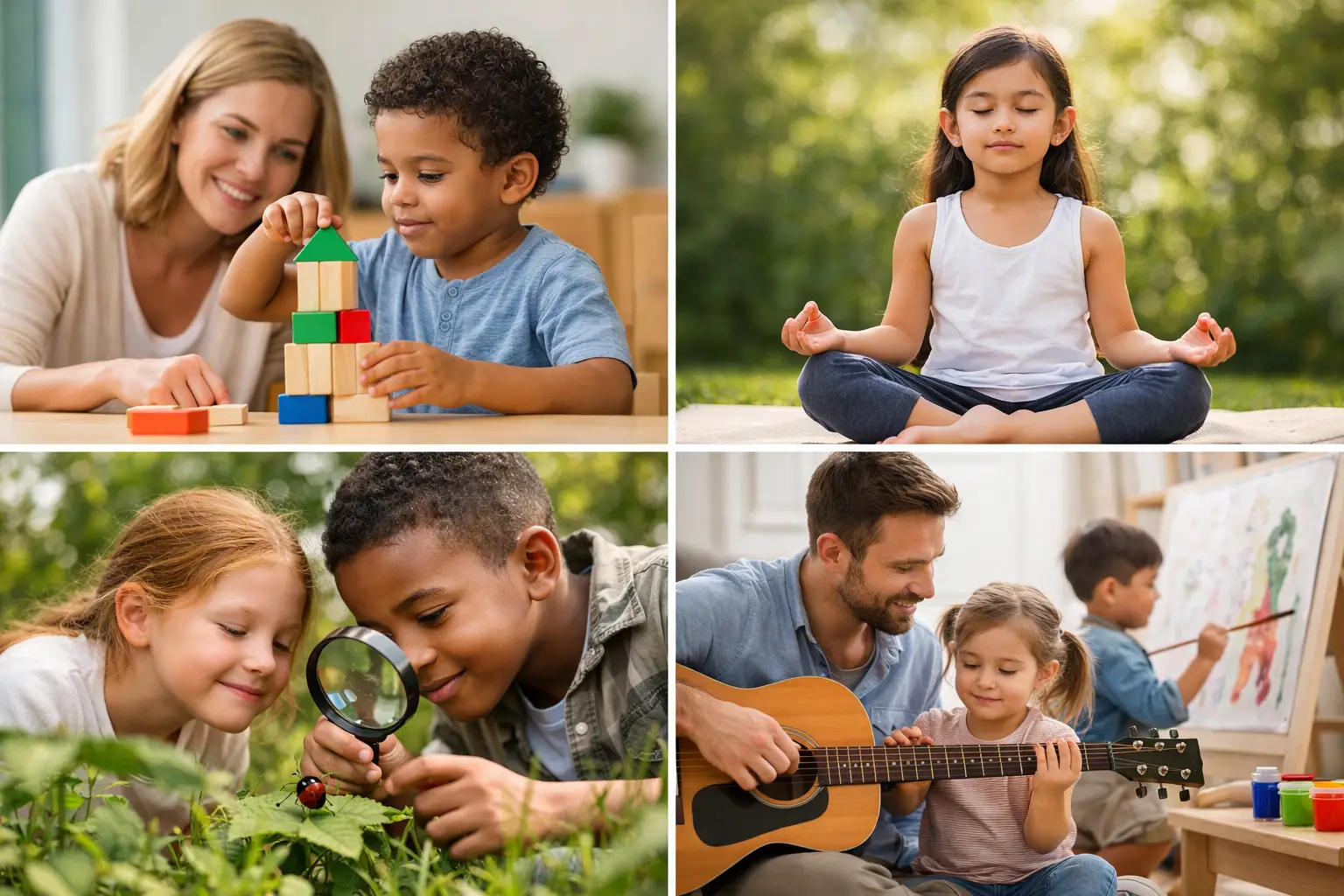
A child who can read early but melts down over small frustrations is not fully thriving. A child who is kind and creative but constantly exhausted and overstimulated is not fully supported either. That is why holistic child development activities matter. They help parents build the whole child – physical, mental, emotional, and spiritual – instead of pouring all their energy into just behavior, academics, or sports.
Most parenting advice gets fragmented fast. One expert talks about milestones. Another focuses on screen time. Another is all about discipline. Parents are left piecing together a system on their own. A holistic approach changes that. It gives you an instruction manual you never got by helping you see how one activity can strengthen multiple parts of your child at once.
At their best, these activities are not complicated, expensive, or time-consuming. They are intentional experiences that shape how your child moves, thinks, feels, relates, and makes meaning of the world. A simple family walk can support physical health, emotional connection, curiosity, and gratitude in one shot.
That matters because children do not develop in neat categories. A child who is sleep-deprived may struggle emotionally. A child who feels insecure may have trouble learning. A child who never gets quiet reflection may become restless even in a loving home. When parents understand these connections, everyday choices start to change everything.
The goal is not perfection. The goal is balance over time. Some weeks your family will do better with outdoor play than deep conversation. Other weeks you may focus more on calming emotions or rebuilding routines. That does not mean you are failing. It means parenting is real life, and good guidance has to work in real life.
Holistic child development activities work best when you think in four dimensions.
This includes strength, coordination, sleep, nutrition, sensory regulation, and healthy routines. Physical development is not just about sports. It is also about whether your child has the energy and regulation needed to learn and connect.
This covers attention, language, memory, problem-solving, imagination, and the ability to learn from experience. Mental growth is shaped by conversation, play, challenge, repetition, and space to think.
This includes self-awareness, empathy, emotional regulation, resilience, and relationship skills. Emotional growth does not happen from lectures. It happens through practice, modeling, and safe connection.
For some families, this includes faith and prayer. For others, it may look like gratitude, purpose, moral awareness, wonder, service, and a sense that life has meaning beyond immediate comfort. This dimension is often neglected, yet it steadies children in a noisy world.
The best activities are simple enough to repeat. Repetition is where growth happens.
A walk is one of the most complete activities you can offer. It develops gross motor movement, reduces stress, opens conversation, and slows the pace of the day. For younger kids, ask what they notice. For older kids, ask questions like, What was the hardest part of today? What are you looking forward to this week?
This works especially well for children who resist face-to-face conversation. Side-by-side movement often lowers pressure and helps kids open up.
Reading aloud is not only for toddlers. It builds language, attention, imagination, empathy, and moral reasoning at almost every age. Pause to ask what a character might be feeling, what choice was wise, or what your child would do differently.
The trade-off is that this takes consistency. A single long reading session will not do what ten shorter sessions can do over time.
Children need to feel capable, not just entertained. Age-appropriate chores build coordination, focus, perseverance, belonging, and respect for shared life. A preschooler can match socks. An elementary-age child can wipe counters. A preteen can help plan a meal.
What matters is not chore perfection. What matters is the message: You are part of this family, and your contribution matters.
Emotional development grows faster when children have repeated chances to name what is happening inside them. Try a quick check-in at breakfast, after school, or before bed. Ask, What are you feeling right now? What happened? What would help?
Some children answer immediately. Others need choices like frustrated, excited, nervous, lonely, or proud. Keep it calm and brief. If every check-in turns into a lecture, kids stop sharing.
Blocks, art supplies, cardboard, clay, fabric scraps, and household materials can do more for development than many flashy toys. Open-ended creation strengthens fine motor skills, problem-solving, patience, sensory exploration, and confidence.
It also reveals a lot about your child. Some children plan carefully. Others experiment wildly. Neither style is wrong. Your job is not to control the outcome but to give space for meaningful effort.
Not every valuable activity is active or noisy. Children need moments of stillness. Depending on your family, that may include prayer, journaling, gratitude sharing, breathing quietly, or reflecting on what was good, hard, or worth learning in the day.
This is one of the most overlooked holistic child development activities because it does not produce a flashy result. But it helps children build inner life, humility, perspective, and peace.
Healthy development is not only about self-expression. It is also about learning to care for others. Service can be simple: making a card for a grandparent, helping a neighbor, donating toys thoughtfully, or preparing food for someone who is sick.
Children who serve learn empathy in concrete ways. They begin to see that their actions can bring comfort, not just convenience.
Set aside regular time for hands-on learning with no passive entertainment running in the background. Cook together, plant something, fix a loose hinge, practice music, learn basic first aid, or work on a puzzle.
This kind of time builds concentration and competence. It also protects against one of the biggest modern problems: children consuming more input than they can process.
A good framework should reduce confusion, not add to it. Start with your child’s developmental stage.
For babies and toddlers, the focus is sensory experience, attachment, movement, rhythm, and language exposure. Think floor play, songs, simple routines, outdoor time, and warm interaction. They do not need complicated enrichment. They need responsive care and rich everyday experiences.
For preschool and early elementary years, children benefit from imaginative play, early responsibility, emotional coaching, movement, and lots of conversation. This is a prime season for shaping habits, not just correcting behavior.
For older children and preteens, activities should include more ownership. Let them help cook, solve problems, serve others, reflect on choices, and stretch into meaningful challenges. At this age, they still need connection, but they also need trust and guided independence.
If you are parenting multiple ages, do not try to customize every moment perfectly. Shared family practices often work better than separate plans. A walk, meal prep session, read-aloud, or gratitude habit can be adapted across ages with small adjustments.
The biggest mistake is overemphasizing one dimension and assuming it covers the rest. A child can be busy all week and still be emotionally undernourished. A child can be high-achieving and spiritually empty. A child can be deeply loved and still lack mental challenge or physical rhythm.
Another common mistake is chasing novelty. Parents buy new materials, start big routines, and burn out fast. Children usually benefit more from steady rhythms than constant newness.
Finally, many parents underestimate their own influence. You do not need to be a therapist, teacher, or child psychologist to use these practices well. You need a clear framework, realistic consistency, and the willingness to be intentional. That is why a strong parenting system matters. It turns guesswork into daily action.
The breakthrough is not finding one perfect activity. It is building a home where your child is strengthened in all four dimensions, little by little, year after year. That kind of parenting does not just manage the day. It shapes the person your child is becoming.
Click here to explore parenting resources and tools starting at under a dollar. Equip yourself with knowledge and strategies to raise confident, resilient, and empathetic children.



There are no comments