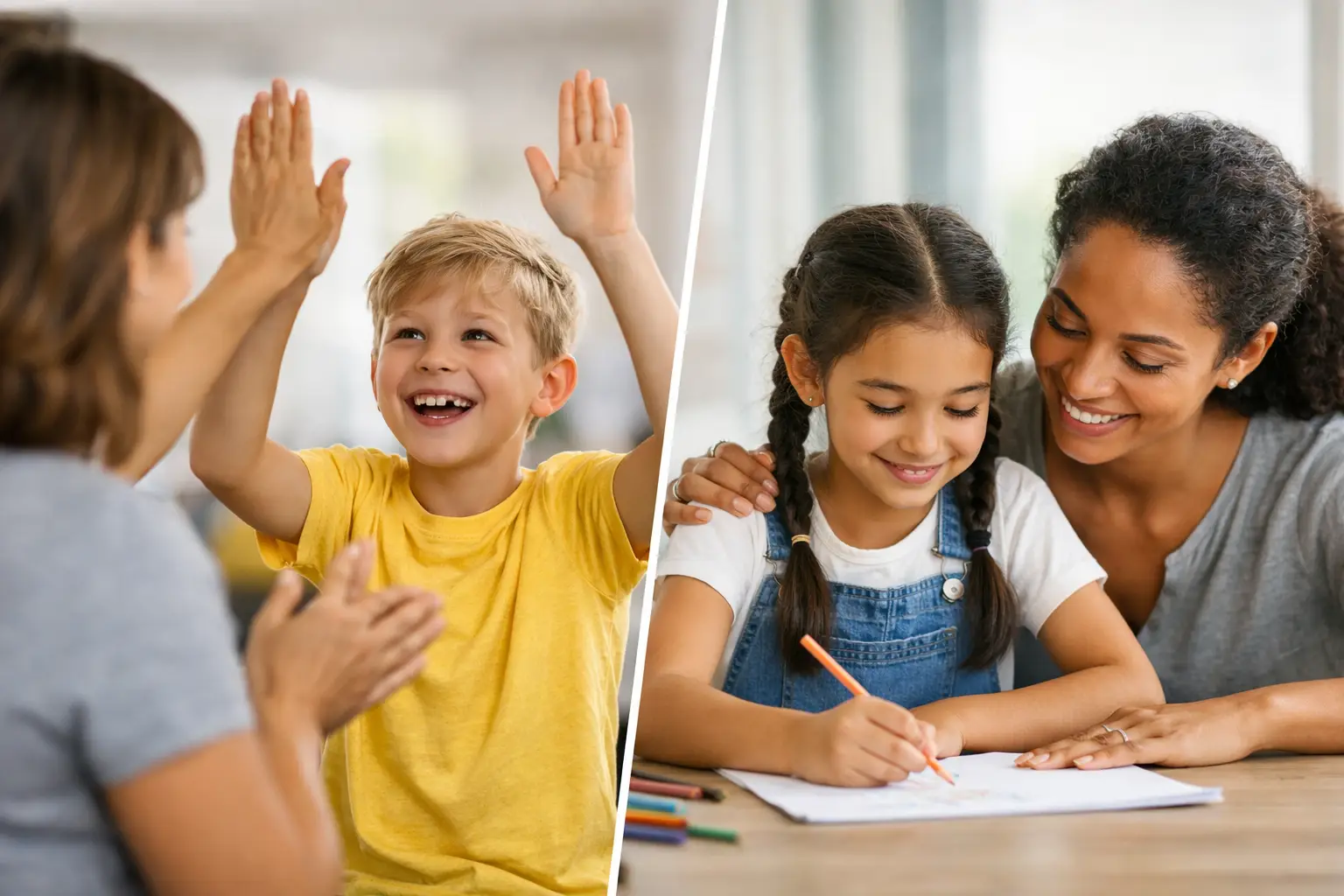
A child rushes over with a drawing, a completed chore, or a hard-won soccer goal. Our instinct is immediate: “Good job!” It is loving, natural, and often welcomed. But the difference between praise versus encouragement can shape what children learn to value: adult approval or their own growing ability to notice effort, make choices, and keep going when something is hard.
This is not about becoming a cold or silent parent. Children need to feel seen, celebrated, and delighted in. The breakthrough is learning how to respond in a way that builds more than a happy moment. It builds the emotional and mental strength they will carry into school, friendships, setbacks, and adulthood.
Praise Versus Encouragement: The Key Difference
Praise usually evaluates a child or their result. It tells them what we think: “You are so smart,” “That was beautiful,” or “You are the best helper.” Encouragement focuses on the child’s effort, choices, process, or experience. It might sound like: “You stayed with that puzzle even when the corner pieces were frustrating,” or “You noticed the dog needed water and took care of it.”
Praise is not automatically harmful. A joyful “You did it!” after your child learns to ride a bike can be part of a meaningful family memory. The concern comes when evaluation becomes the main source of motivation. If children repeatedly hear that they are smart only when work comes easily, or great only when they win, they may begin avoiding situations where they could fail.
Encouragement sends a different message: you can handle effort, learning, and imperfection. It helps a child develop an inner voice that says, “I can try another way,” rather than, “Will Mom or Dad think I did well enough?”
Why Constant Praise Can Backfire
Children are remarkably skilled at reading what adults value. When approval is attached only to performance, they may chase the applause instead of developing judgment, responsibility, or genuine enjoyment. A child who hears “You are such a good artist” may stop drawing freely because every picture now feels like a test.
Person-focused praise can also create labels. “You are my brave girl” sounds positive, but it can make a child feel they must hide fear to keep that identity. “You are so smart” can make a child feel embarrassed when they need help. Children need permission to be afraid, confused, disappointed, and still worthy of love.
There is a trade-off to consider. Generic praise is fast and easy during busy family life. Encouragement takes a few more seconds of attention. Yet those seconds teach children to recognize what happened inside them: their persistence, problem-solving, kindness, self-control, and courage.
What Encouragement Sounds Like at Home
Encouragement is specific, honest, and connected to what your child actually did. It does not require exaggerated excitement or long speeches. Often, a calm observation is more powerful than a big reaction.
Instead of “Good job cleaning your room,” try, “You put the books back and carried your laundry to the basket without being reminded.” Rather than “You are so talented,” say, “You practiced that song several times, and the hard part is getting smoother.”
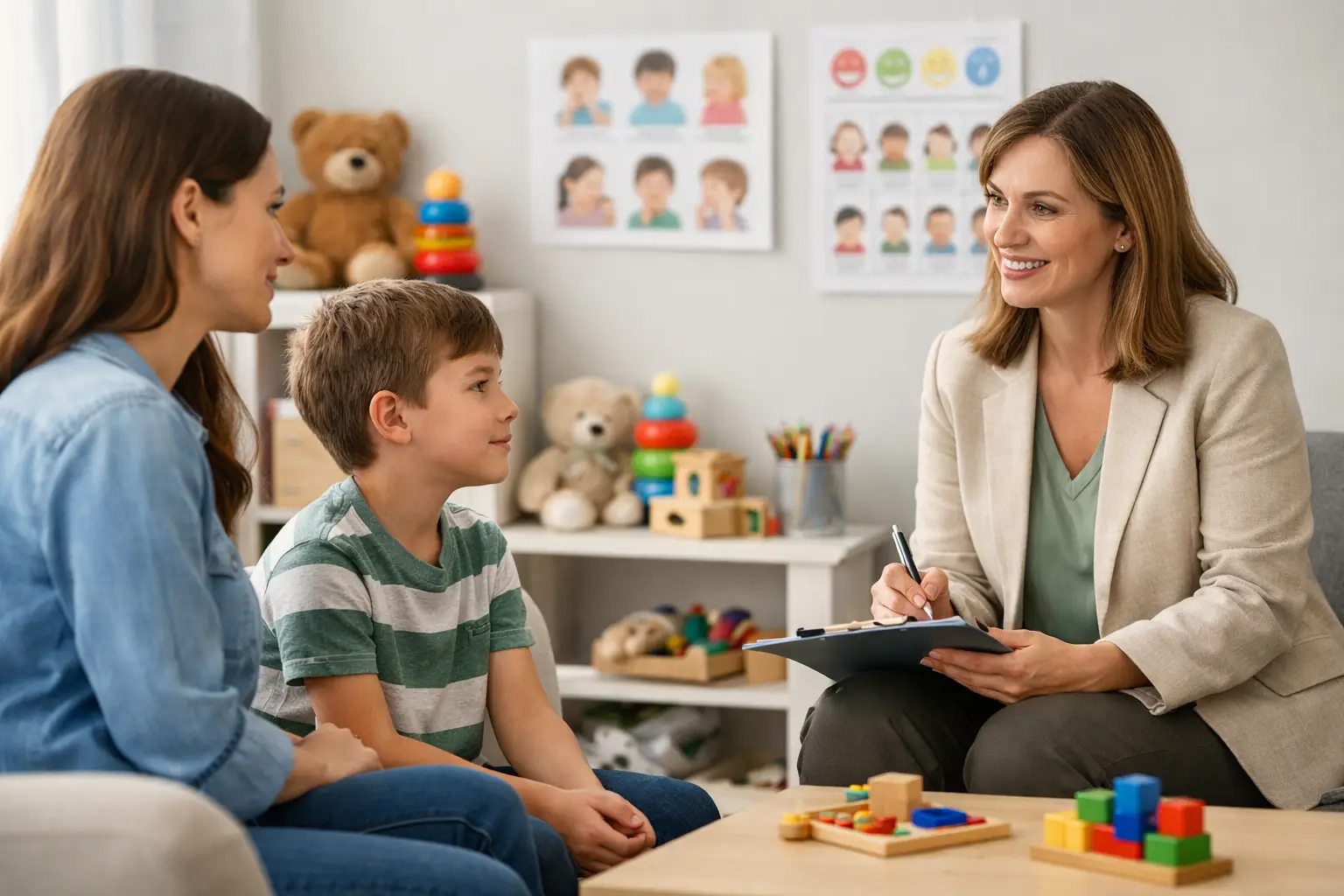
A few questions can turn encouragement into a conversation: “What part was hardest?” “What did you try when that did not work?” “How do you feel about it?” “What would you want to do differently next time?” These questions do not demand a perfect answer. They help children notice their own growth.
Encouragement also includes confidence during struggle. When a child is upset over homework, “You can do it” may feel dismissive if the work truly feels impossible. Try, “This is challenging right now. Let’s look at the first step,” or “You do not have to know it yet. What information do you have?” This validates the emotion while strengthening the child’s ability to act.
Match Your Words to Your Child’s Age
The same principle works from toddlerhood through adolescence, but the language should grow with the child.
Toddlers and Preschoolers
Young children need simple, immediate observations. “You used gentle hands with the baby.” “You kept trying to zip your coat.” “You are disappointed that playtime is over. It is hard to stop when you are having fun.”
At this stage, encouragement supports physical coordination, emotional vocabulary, and early self-control. It also gives children words for behavior without turning every action into a judgment of whether they are good or bad.
Elementary-Age Children
School-age children begin comparing themselves with peers. This is when broad labels such as “smart,” “pretty,” or “athletic” can become especially limiting. Focus on strategies: “You broke that big assignment into smaller parts,” “You asked a question when you were confused,” or “You chose to take a break before you got too frustrated.”
When they bring home a grade, resist making the number the entire conversation. Ask what they learned, what surprised them, and what support they need next. Celebrate progress, but do not pretend every result is wonderful. Honest encouragement can say, “I know you hoped for a higher score. You worked hard, and we can figure out what to practice.”
Preteens and Teens
Older children can spot fake praise immediately. They need respect, not cheerleading. Notice the decisions behind the outcome: “You handled that disagreement without insulting your friend,” or “You followed through on a commitment even though you were tired.”
Teens also need room to own their goals. Instead of telling them how proud you are before asking anything else, begin with, “How do you feel about your performance?” Your pride matters, but their assessment matters too. This shift supports independence, identity, and the spiritual dimension of character: learning to live from values rather than applause.
Encouragement Is Not Letting Standards Slide
Some parents worry that less praise means less accountability. The opposite can be true. Encouragement makes correction more effective because it separates the child from the behavior. A child is not “bad” because they lied, shoved a sibling, or ignored a responsibility. They made a choice that needs repair.
You can be both warm and firm: “You were angry, and hitting is not okay. What can you do with your body when you feel that angry?” Or, “You did not complete your chore. The responsibility is still yours. What is your plan to finish it?” This approach develops emotional regulation and responsibility without shame.
The same balance applies to achievement. Children should know that effort does not guarantee every outcome. Practice may not earn the starting position, and studying may not produce an A every time. Encouragement does not promise success. It teaches children that effort, feedback, integrity, and resilience remain valuable even when the result disappoints them.
When Praise Still Has a Place
Parents do not need to ban the words “good job.” Family life should be warm, spontaneous, and full of celebration. Use praise when you are sharing genuine delight, especially after a meaningful milestone. Let your child hear that you are proud of them.
The goal is variety and intention. Pair celebration with a specific observation. “Good job making the team. You kept practicing after the first tryout was tough.” “I am proud of how you apologized to your sister. That took courage.” The child receives your joy and learns what inner strength helped create the moment.
If you realize you have leaned heavily on praise, do not criticize yourself. Parenting is full of repeated chances to adjust. Start with one daily moment when you describe what you see instead of evaluating it. The 4D-2D approach recognizes that children grow physically, mentally, emotionally, and spiritually through ordinary interactions like these.
Tonight, listen for one effort your child makes that might otherwise pass unnoticed. Name it with care. You may be giving them something far more lasting than approval: a clearer view of their own capacity to grow.
Click here to explore parenting resources and tools starting at under a dollar. Equip yourself with knowledge and strategies to raise confident, resilient, and empathetic children.




There are no comments