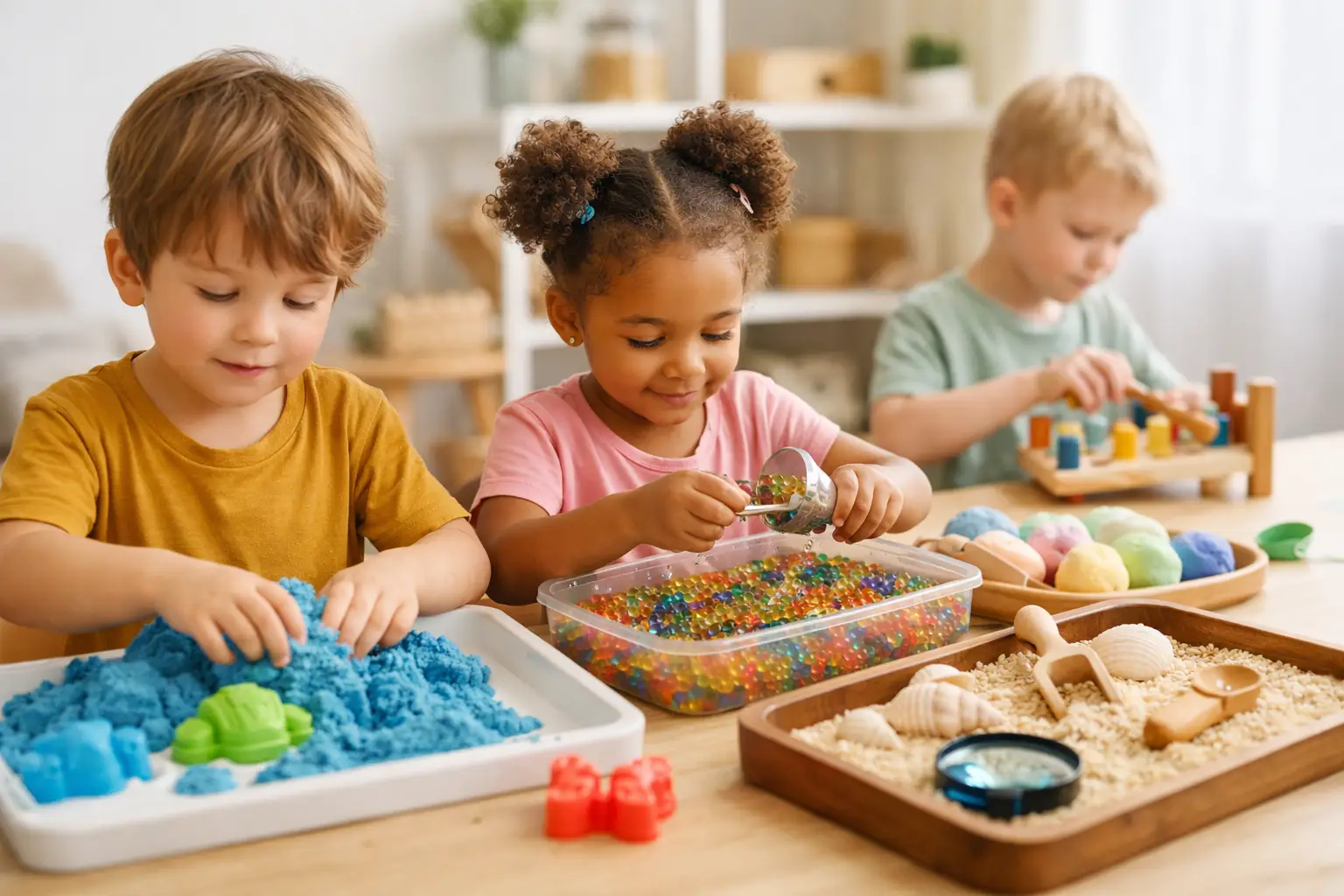
A child who pours water from cup to cup, presses dough between small fingers, or listens for birds on a walk is not just staying busy. They are building a brain-body connection that supports learning, emotional regulation, confidence, and curiosity. The best sensory play ideas give children meaningful experiences with touch, movement, sound, sight, smell, and sometimes taste – without requiring a playroom full of expensive supplies.
Sensory play is especially valuable for families who want to reduce screen dependence and replace passive entertainment with real-world discovery. It can help a busy toddler settle, give a cautious preschooler a safe way to explore, or invite an older child to slow down and focus. The goal is not to create a perfect activity. The goal is to help your child engage fully with the world God has placed around them.
Why Sensory Play Changes More Than Playtime
Children learn through their senses long before they can explain what they are learning. When a baby reaches for a textured cloth, they are practicing coordination. When a preschooler scoops dry rice, they are learning cause and effect, hand control, and persistence. When a school-age child mixes ingredients for bread, they are using planning, patience, and problem-solving.
This matters because development is never only physical or only academic. Sensory experiences can strengthen all four dimensions of healthy growth. Physical development comes through movement and fine-motor work. Mental development grows through observation, comparison, and experimentation. Emotional development is supported when children practice tolerating new feelings and calming their bodies. Spiritual development can grow through wonder, gratitude, care for living things, and awareness of the natural world.
Sensory play does not need to be messy to be effective. Some children love finger paint and mud. Others become overwhelmed by sticky hands, loud sounds, or unfamiliar smells. Follow your child’s cues. Encouragement works better than pressure, and a small, successful experience builds more confidence than forcing a child to participate.
Best Sensory Play Ideas by Age and Stage
Choose activities based on your child’s developmental readiness, not only the age on the calendar. Stay close to babies and young toddlers, especially around anything small enough to swallow. For older children, let them take more ownership by preparing materials, changing the rules, and cleaning up.
Babies: Safe Discovery Through Touch and Movement
- Texture basket: Place a few clean, safe household items in a shallow basket, such as a soft washcloth, silicone spatula, large wooden spoon, and textured ball. Sit with your baby as they reach, grasp, mouth, and compare each object.
- Water mat play: Fill a sealed sensory water mat or a tightly sealed plastic bag with a small amount of water and large, flat objects. Tummy time becomes more interesting when babies can press and watch objects move beneath their hands.
- Ribbon and scarf movement: Slowly wave lightweight scarves above your baby, then let them grasp the fabric. Name what they see: “The blue scarf is floating down.” This supports visual tracking and early language.
- Nature listening walk: Step outside, hold your baby securely, and pause. Listen for wind, a dog barking, leaves moving, or a truck passing. Quietly describe each sound instead of filling every moment with conversation.
- Warm and cool washcloths: Offer two damp washcloths, one slightly warm and one cool, never extreme in temperature. This simple activity helps babies notice contrast while enjoying calm one-on-one attention.
Toddlers: Big Feelings, Big Movement, Real Exploration
- Scoop-and-pour station: Put dry oats, large pasta shapes, or water in a bin with cups, spoons, and containers. Toddlers may repeat the same action dozens of times. That repetition is how they learn control and cause and effect.
- Homemade play dough: Let your child squeeze, roll, flatten, and hide large objects in soft dough. Add cookie cutters or a plastic knife for more challenge. If your child dislikes sticky textures, begin with a tool rather than asking them to touch the dough directly.
- Painter’s tape pathways: Create lines, curves, and simple shapes on the floor with painter’s tape. Ask your toddler to walk the line, hop between marks, crawl under a chair, or carry a stuffed animal to the finish. This is sensory play for the whole body.
- Bubble chase: Blow bubbles outdoors and invite your child to pop, stomp, catch, and watch them drift. Add simple language: “That one went high,” or “Can you find the biggest bubble?”
- Sink washing station: Give your toddler a bowl of soapy water, a sponge, and plastic dishes or toy animals. Washing, rinsing, and drying build practical skills while offering a calming rhythm after an active morning.
Preschoolers: Curiosity Becomes Investigation
- Color mixing with ice: Freeze colored water in an ice tray, then place the cubes in a clear container or on a tray. Preschoolers can watch colors melt and combine while noticing cold, slippery, changing textures.
- Scent jars: Place familiar scents in small containers, such as cinnamon, lemon peel, vanilla, coffee grounds, or mint. Let your child smell one at a time and describe what each scent reminds them of. Keep scents mild and skip this activity if smells trigger discomfort.
- Backyard mud kitchen: Set out old bowls, spoons, water, soil, leaves, and flowers that are safe to handle. Children can create “soup” and “cakes” while practicing imagination and learning that nature is worth observing, not just rushing past.
- Sound matching: Fill pairs of sealed containers with different materials, such as rice, coins, beans, or small bells. Shake them and ask your child to find the two that sound alike. This develops listening, memory, and careful attention.
School-Age Children: More Independence and Deeper Focus
- Make a sensory recipe: Invite your child to help make bread dough, trail mix, fruit salad, or homemade lemonade. They can measure, stir, smell, taste, and notice changes. Cooking is one of the strongest everyday sensory experiences because it connects practical responsibility with creativity.
Older children may also enjoy a barefoot nature walk in a safe area, a timed mystery-feel bag challenge, gardening, woodworking with close supervision, or creating a calming sensory corner with a soft blanket, a journal, music, and a few comforting objects. At this stage, sensory play can become self-knowledge: “What helps my body feel settled?”
How to Make Sensory Activities Work in Real Family Life
The most useful sensory activity is the one you can repeat without stress. Start with ten minutes, one or two materials, and a clear boundary. A towel under the water bin, a tray under the dough, and a simple cleanup routine prevent play from becoming another exhausting task on your list.
Offer choices when you can. You might say, “Would you rather use the scoop or your hands?” or “Do you want to touch the foam first, or watch me do it?” Choice gives children appropriate control, which often reduces resistance and power struggles.
Pay attention to your child’s response rather than assuming more stimulation is better. A child who becomes frantic, throws materials, covers their ears, or tries to leave may be telling you the activity is too intense, too long, or simply not a good fit today. Reduce the noise, simplify the materials, or offer a quieter option. Sensory play should stretch a child gently, not overwhelm them.
Safety also matters. Avoid small loose objects with children who mouth items, supervise water play at all times, use non-toxic materials, and wash hands after outdoor or food-based activities. If your child has known allergies, sensitivities, developmental concerns, or unusually strong sensory reactions, tailor activities carefully and seek professional guidance when needed.
Use Sensory Play to Build the Four Dimensions
A strong activity becomes even more valuable when you add a thoughtful question. During a walk, ask, “What do you notice with your ears?” While kneading dough, ask, “What changed when you added water?” After a child calms down in a cozy corner, ask, “Did that help your body feel more peaceful?”
These small conversations turn play into intentional parenting. You are helping your child name sensations, understand emotions, think through problems, and recognize the beauty and order around them. This is the kind of everyday guidance that helps raise a child who is not merely entertained, but equipped.
You do not need a complicated plan to begin. Put a bowl of water on a towel, walk outside and listen together, or hand your child a lump of dough while you make dinner. When you make room for real sensory experiences, you give your child something a screen cannot provide: the steady confidence that comes from discovering, feeling, trying, and growing in the real world.
Click here to explore parenting resources and tools starting at under a dollar. Equip yourself with knowledge and strategies to raise confident, resilient, and empathetic children.




There are no comments